Essays · Philosophy · 1897
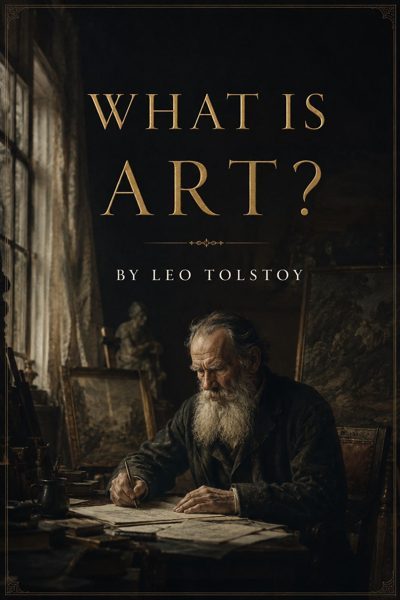
What Is Art?
예술이란 무엇인가
Read it the way it was written, with a translation in your own language right beside every sentence. Tap any line to improve the translation with AI.
Free, no account needed to read.
About the book
A critical treatise in which Tolstoy examines the nature and purpose of art. He argues that art should communicate feeling and serve moral ends.
From the text
“More than one edition has already been issued in Russia, but in each case it has been so mutilated by the “Censor,” that I request all who are interested in my views on art only to judge of them by the work in its present shape.”
What Is Art? · Leo Tolstoy
Read a sample
The English original with a Korean translation, one sentence at a time. In the app you can pick from 20 languages.
I was weak enough to agree to this, and it has resulted in a book appearing, under my name, from which not only have some essential thoughts been excluded, but into which the thoughts of other men—even thoughts utterly opposed to my own convictions—have been introduced.
나는 나약하여 이에 동의했고, 그 결과 내 이름으로 책이 출판되었는데, 그 책에는 필수적인 생각들이 배제되었을 뿐 아니라 다른 사람들의 생각, 심지어 내 신념과 완전히 상반되는 생각들까지 삽입되었다.
The thing occurred in this way.
그 일은 이와 같이 일어났습니다.
First, Grote softened my expressions, and in some cases weakened them.
먼저 그로테는 내 표현을 부드럽게 하고 어떤 경우에는 약화시켰습니다.
For instance, he replaced the words: always by sometimes, all by some, Church religion by Roman Catholic religion, “Mother of God” by Madonna, patriotism by pseudo-patriotism, palaces by palatii, etc., and I did not consider it necessary to protest.
예를 들어 그는 항상을 때때로로, 모든을 일부로, 교회 종교를 로마 가톨릭 종교로, “하느님의 어머니”를 마돈나로, 애국심을 가짜 애국심으로, 궁전을 palatii로 바꾸었으며 나는 이에 대해 항의할 필요성을 느끼지 못했습니다.
But when the book was already in type, the Censor required that whole sentences should be altered, and that instead of what I said about the evil of landed property, a remark should be substituted on the evils of a landless proletariat. I agreed to this also and to some further alterations.
그러나 책이 이미 활자로 인쇄되었을 때 검열관은 문장 전체를 수정하고 토지 소유의 폐해에 대해 말한 내용 대신 토지 없는 프롤레타리아의 폐해에 대한 언급을 넣으라고 요구했습니다. 저는 이것과 몇 가지 추가적인 수정 사항에도 동의했습니다.
It seemed not worth while to upset the whole affair for the sake of one sentence, and when one alteration had been agreed to it seemed not worth while to protest against a second and a third.
한 문장 때문에 모든 일을 뒤엎는 것은 가치가 없어 보였고, 한 가지 변경에 동의한 후에 두 번째, 세 번째 변경에 반대하는 것은 가치가 없어 보였습니다.
So, little by little, expressions crept into the book which altered the sense and attributed things to me that I could not have wished to say.
그리하여 조금씩 그 책에 표현들이 스며들어 의미를 바꾸고 내가 말하고 싶지 않았던 것들을 내게 귀속시키게 되었습니다.
So that by the time the book was printed it had been deprived of some part of its integrity and sincerity.
그래서 책이 인쇄될 무렵에는 그 책의 진실성과 진정성의 일부가 손상되었습니다.
A short sample from the opening chapters of the book.
Read it in your language
Each sentence of the English original sits beside a translation. Pick the language you want to read along in.
- English (original)
- 한국어 Korean
- 日本語 Japanese
- 中文 简体 Chinese
- 中文 繁體 Chinese
- Español Spanish
- Français French
- Deutsch German
- Italiano Italian
- Português Portuguese
- Русский Russian
- Nederlands Dutch
- Polski Polish
- Svenska Swedish
- Türkçe Turkish
- العربية Arabic
- हिन्दी Hindi
- Tiếng Việt Vietnamese
- Bahasa Indonesia
- ไทย Thai
- Čeština Czech
How reading works in ReadGem
- Side by sideThe English original and your translation, one sentence at a time.
- OfflineDownload the book once and read anywhere, no connection needed.
- Improve itSee a line that could be better? Suggest a new translation with on-device AI.
Book details
- Title
- What Is Art? (예술이란 무엇인가)
- Author
- Leo Tolstoy
- First published
- 1897
- Genre
- Essays, Philosophy
- Original language
- English
- Translations in app
- 20 languages
- Price
- Free