Philosophy · Classic
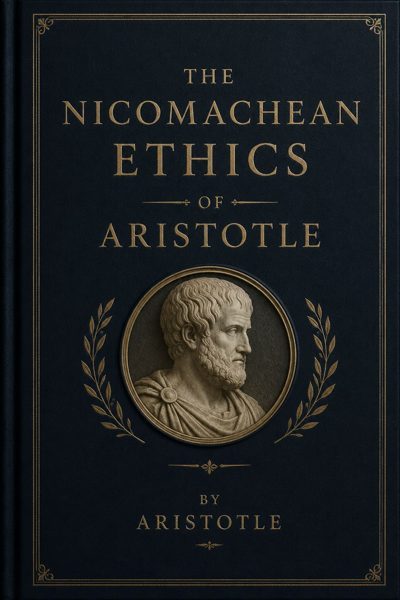
The Nicomachean Ethics
니코마코스 윤리학
Read it the way it was written, with a translation in your own language right beside every sentence. Tap any line to improve the translation with AI.
Free, no account needed to read.
About the book
Aristotle's treatise on ethics examines what the good life for humans consists of. It discusses happiness, virtue, friendship and pleasure.
From the text
“Every art, and every science reduced to a teachable form, and in like manner every action and moral choice, aims, it is thought, at some good: for which reason a common and by no means a bad description of the Chief Good is, “that which all things aim at.””
The Nicomachean Ethics · Aristotle
Read a sample
The English original with a Korean translation, one sentence at a time. In the app you can pick from 20 languages.
Every art, and every science reduced to a teachable form, and in like manner every action and moral choice, aims, it is thought, at some good: for which reason a common and by no means a bad description of the Chief Good is, “that which all things aim at.”
모든 예술과 모든 과학은 가르칠 수 있는 형태로 축소되었고, 마찬가지로 모든 행동과 도덕적 선택은 어떤 선을 목표로 한다고 생각됩니다. 그러므로 최고선을 묘사하는 데 있어 흔하고 결코 나쁘지 않은 표현은 "모든 것이 목표로 하는 것"입니다.
Now there plainly is a difference in the Ends proposed: for in some cases they are acts of working, and in others certain works or tangible results beyond and beside the acts of working: and where there are certain Ends beyond and beside the actions, the works are in their nature better than the acts of working.
이제 제안된 목적에는 분명한 차이가 있습니다. 어떤 경우에는 행위 자체가 목적이고, 어떤 경우에는 행위 외에 특정한 결과물이나 구체적인 행위가 목적입니다. 행위 외에 특정한 목적이 있는 경우에는 그 행위 자체가 행위보다 본질적으로 더 낫습니다.
Again, since actions and arts and sciences are many, the Ends likewise come to be many: of the healing art, for instance, health; of the ship-building art, a vessel; of the military art, victory; and of domestic management, wealth; are respectively the Ends.
또 행위와 기술과 과학이 많으므로 목적도 많습니다. 예를 들어, 치료술의 목적은 건강이고, 조선술의 목적은 배이며, 군사술의 목적은 승리이고, 가정생활의 목적은 부입니다.
And whatever of such actions, arts, or sciences range under some one faculty (as under that of horsemanship the art of making bridles, and all that are connected with the manufacture of horse-furniture in general; this itself again, and every action connected with war, under the military art; and in the same way others under others), in all such, the Ends of the master-arts are more choice-worthy than those ranging under them, because it is with a view to the former that the latter are pursued.
그리고 그러한 행위, 기술 또는 과학이 어떤 하나의 능력 아래에 속해 있는 모든 것(예를 들어 승마술 아래에는 고삐 만드는 기술과 말 용품 제조와 관련된 모든 것이 포함되고, 군사술 아래에는 이것 자체와 전쟁과 관련된 모든 행위가 포함되며, 이와 같은 방식으로 다른 것들 아래에도 다른 것들이 포함됨)에서, 모든 경우에 있어서 주된 기술의 목적은 그 아래에 있는 것들보다 더 가치 있는 것입니다. 왜냐하면 후자는 주된 기술을 추구하기 위한 것이기 때문입니다.
(And in this comparison it makes no difference whether the acts of working are themselves the Ends of the actions, or something further beside them, as is the case in the arts and sciences we have been just speaking of.)
(그리고 이 비교에서 행위 자체가 행위의 목적이든, 아니면 우리가 방금 이야기한 예술과 과학의 경우처럼 그 외에 다른 어떤 것이 목적이든 간에 아무런 차이가 없습니다.)
Since then of all things which may be done there is some one End which we desire for its own sake, and with a view to which we desire everything else; and since we do not choose in all instances with a further End in view (for then men would go on without limit, and so the desire would be unsatisfied and fruitless), this plainly must be the Chief Good, i.e. the best thing of all.
그러므로 우리가 행할 수 있는 모든 일 가운데 우리가 그 자체로 바라는 유일한 목적이 있고, 다른 모든 것을 바라는 목적이 바로 그것입니다. 우리가 모든 경우에 더 나은 목적을 염두에 두고 선택하지 않는다면 (그렇게 한다면 사람들은 끝없이 나아가게 되고, 욕망은 만족되지 않고 헛될 것이기 때문입니다), 이것이 분명히 가장 좋은 선, 즉 모든 것 중에서 가장 좋은 것이어야 합니다.
Surely then, even with reference to actual life and conduct, the knowledge of it must have great weight; and like archers, with a mark in view, we shall be more likely to hit upon what is right: and if so, we ought to try to describe, in outline at least, what it is and of which of the sciences and faculties it is the End.
그러므로 실제 삶과 행위에 관해서도 그것에 대한 지식은 분명히 큰 비중을 차지할 것이며, 궁수가 과녁을 조준하듯이 옳은 것을 맞힐 가능성이 더 클 것입니다. 그러므로 우리는 적어도 개략적으로 그것이 무엇이며 어떤 학문과 능력의 최종 목표인지 설명하려고 노력해야 합니다.
Now one would naturally suppose it to be the End of that which is most commanding and most inclusive: and to this description, πολιτικὴ plainly answers: for this it is that determines which of the sciences should be in the communities, and which kind individuals are to learn, and what degree of proficiency is to be required.
이제 누구나 그것이 가장 권위 있고 가장 포괄적인 것의 끝이라고 자연스럽게 생각할 것입니다. 그리고 이 설명에 대해 πολιτικὴ은 분명히 답합니다. 왜냐하면 이것이 공동체에 어떤 과학이 있어야 하는지, 어떤 종류의 개인이 배워야 하는지, 그리고 어느 정도의 숙련도가 요구되는지를 결정하기 때문입니다.
A short sample from the opening chapters of the book.
Read it in your language
Each sentence of the English original sits beside a translation. Pick the language you want to read along in.
- English (original)
- 한국어 Korean
- 日本語 Japanese
- 中文 简体 Chinese
- 中文 繁體 Chinese
- Español Spanish
- Français French
- Deutsch German
- Italiano Italian
- Português Portuguese
- Русский Russian
- Nederlands Dutch
- Polski Polish
- Svenska Swedish
- Türkçe Turkish
- العربية Arabic
- हिन्दी Hindi
- Tiếng Việt Vietnamese
- Bahasa Indonesia
- ไทย Thai
- Filipino
How reading works in ReadGem
- Side by sideThe English original and your translation, one sentence at a time.
- OfflineDownload the book once and read anywhere, no connection needed.
- Improve itSee a line that could be better? Suggest a new translation with on-device AI.
Book details
- Title
- The Nicomachean Ethics (니코마코스 윤리학)
- Author
- Aristotle
- Genre
- Philosophy, Classic
- Original language
- English
- Translations in app
- 20 languages
- Price
- Free