철학 · 에세이 · 1910년
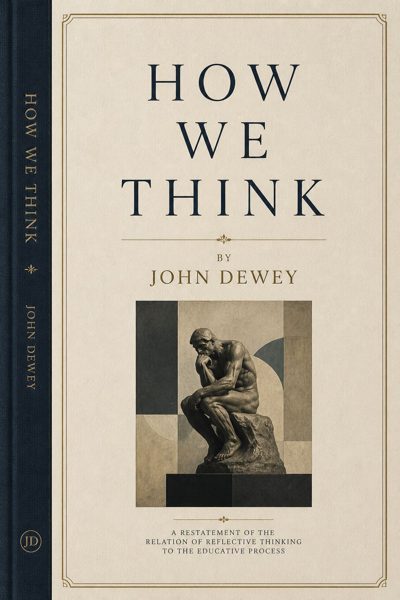
우리는 어떻게 생각하는가
How We Think
원문 그대로 읽으세요. 문장마다 바로 옆에 내 언어 번역이 놓입니다. 더 나아질 수 있는 문장은 AI로 번역을 다듬을 수 있습니다.
무료입니다. 읽는 데 계정이 필요 없습니다.
책 소개
반성적 사고의 본질을 살펴보는 교육학 및 심리학 저작입니다. 듀이는 학교에서 사고를 어떻게 훈련할 수 있는지 논합니다.
본문에서
“Our schools are troubled with a multiplication of studies, each in turn having its own multiplication of materials and principles.”
How We Think · John Dewey
미리 읽어 보기
영어 원문과 한국어 번역을 한 문장씩 나란히 보여 드립니다. 앱에서는 20개 언어로 읽을 수 있습니다.
Our schools are troubled with a multiplication of studies, each in turn having its own multiplication of materials and principles.
우리 학교들은 학문이 많아지고, 각 학문마다 자료와 원리가 많아져서 어려움을 겪고 있습니다.
Our teachers find their tasks made heavier in that they have come to deal with pupils individually and not merely in mass.
우리 선생님들은 이제 학생들을 단순히 집단으로 가르치는 것이 아니라 개별적으로 가르쳐야 하므로 그들의 일이 더욱 무거워졌습니다.
Unless these steps in advance are to end in distraction, some clew of unity, some principle that makes for simplification, must be found.
이러한 사전 조치가 혼란으로 끝나지 않으려면, 어떤 통일의 단서, 즉 단순화를 가능하게 하는 어떤 원칙을 찾아야 합니다.
This book represents the conviction that the needed steadying and centralizing factor is found in adopting as the end of endeavor that attitude of mind, that habit of thought, which we call scientific.
이 책은 우리가 과학적이라고 부르는 마음가짐, 사고 습관을 노력의 목표로 삼는 데 필요한 안정과 중심을 잡아주는 요소가 있다는 확신을 나타냅니다.
This scientific attitude of mind might, conceivably, be quite irrelevant to teaching children and youth.
이러한 과학적 사고방식은 어린이와 청소년을 가르치는 데 전혀 관련이 없을 수도 있습니다.
But this book also represents the conviction that such is not the case; that the native and unspoiled attitude of childhood, marked by ardent curiosity, fertile imagination, and love of experimental inquiry, is near, very near, to the attitude of the scientific mind.
그러나 이 책은 또한 그러한 경우가 아니라는 확신을 나타냅니다. 즉, 열렬한 호기심, 풍부한 상상력, 그리고 실험적 탐구에 대한 사랑으로 특징지어지는, 본래 순수하고 오염되지 않은 어린 시절의 태도는 과학적 사고방식과 매우 가깝다는 것입니다.
If these pages assist any to appreciate this kinship and to consider seriously how its recognition in educational practice would make for individual happiness and the reduction of social waste, the book will amply have served its purpose.
만일 이 페이지들이 누군가에게 이러한 친족 관계를 이해하고 교육 실천에서 이를 인정하는 것이 개인의 행복과 사회적 낭비 감소에 어떻게 기여하는지 진지하게 고려하는 데 도움이 된다면, 이 책은 그 목적을 충분히 달성한 것입니다.
It is hardly necessary to enumerate the authors to whom I am indebted.
내가 빚진 저자들을 일일이 열거할 필요는 거의 없다.
책의 앞부분에서 가져온 짧은 발췌입니다.
내 언어로 읽기
영어 원문의 문장마다 번역이 나란히 놓입니다. 함께 읽고 싶은 언어를 고르세요.
- 영어 (원문)
- 한국어 Korean
- 日本語 Japanese
- 中文 简体 Chinese
- 中文 繁體 Chinese
- Español Spanish
- Français French
- Deutsch German
- Italiano Italian
- Português Portuguese
- Русский Russian
- Nederlands Dutch
- Polski Polish
- Svenska Swedish
- Türkçe Turkish
- العربية Arabic
- हिन्दी Hindi
- Tiếng Việt Vietnamese
- Bahasa Indonesia
- ไทย Thai
- Čeština Czech
ReadGem에서 읽는 방법
- 나란히 읽기영어 원문과 내 언어 번역을 한 문장씩 나란히 봅니다.
- 오프라인책을 한 번 내려받으면 인터넷 없이 어디서든 읽을 수 있습니다.
- 번역 다듬기더 나아질 수 있는 문장이 보이나요? 기기 안의 AI로 새 번역을 제안해 보세요.
책 정보
- 제목
- 우리는 어떻게 생각하는가 (How We Think)
- 저자
- John Dewey
- 최초 출간
- 1910년
- 장르
- 철학, 에세이
- 원문 언어
- 영어
- 앱 안 번역
- 20개 언어
- 가격
- 무료