Philosophy · Essays · 1851
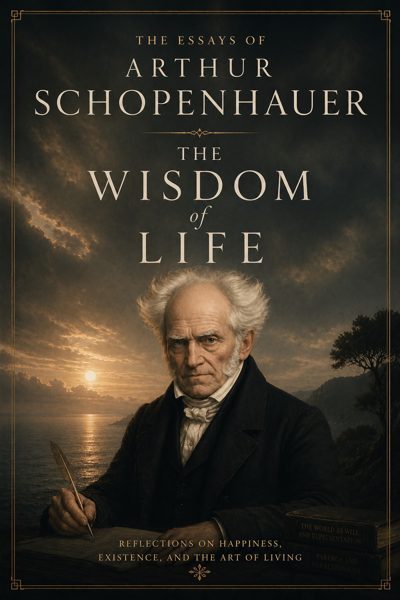
The Wisdom of Life
삶의 지혜
Read it the way it was written, with a translation in your own language right beside every sentence. Tap any line to improve the translation with AI.
Free, no account needed to read.
About the book
Schopenhauer's reflections on how to live a happy life, drawn from his Parerga and Paralipomena. He discusses what a person is, has and represents, and how each affects happiness.
From the text
“In these pages I shall speak of The Wisdom of Life in the common meaning of the term, as the art, namely, of ordering our lives so as to obtain the greatest possible amount of pleasure and success; an art the theory of which may be called Eudaemonology, for it teaches us how to lead a happy existence.”
The Wisdom of Life · Arthur Schopenhauer
Read a sample
The English original with a Korean translation, one sentence at a time. In the app you can pick from 20 languages.
In these pages I shall speak of The Wisdom of Life in the common meaning of the term, as the art, namely, of ordering our lives so as to obtain the greatest possible amount of pleasure and success; an art the theory of which may be called Eudaemonology, for it teaches us how to lead a happy existence.
이 책에서 나는 '삶의 지혜'라는 용어를 일반적인 의미, 즉 가능한 한 최대한의 즐거움과 성공을 얻도록 삶을 정돈하는 기술로 말할 것입니다. 이 기술의 이론은 '행복론'이라고 불릴 수 있는데, 이는 우리에게 행복한 삶을 사는 방법을 가르쳐 주기 때문입니다.
Such an existence might perhaps be defined as one which, looked at from a purely objective point of view, or, rather, after cool and mature reflection--for the question necessarily involves subjective considerations,--would be decidedly preferable to non-existence; implying that we should cling to it for its own sake, and not merely from the fear of death; and further, that we should never like it to come to an end.
그러한 존재는 아마도 순전히 객관적인 관점에서 보거나, 오히려 냉정하고 성숙한 숙고 후에 보면—이 문제는 필연적으로 주관적인 고려를 포함하기 때문에—존재하지 않는 것보다 훨씬 더 나은 것으로 정의될 수 있을 것입니다. 이는 우리가 단지 죽음에 대한 두려움 때문이 아니라 그 자체를 위해 그것에 매달려야 하며, 더 나아가 그것이 끝나는 것을 결코 바라지 않아야 함을 의미합니다.
Now whether human life corresponds, or could possibly correspond, to this conception of existence, is a question to which, as is well-known, my philosophical system returns a negative answer.
이제 인간의 삶이 이러한 존재 개념에 부합하는지, 혹은 부합할 수 있는지는 잘 알려진 바와 같이 나의 철학 체계가 부정적인 답변을 하는 질문입니다.
On the eudaemonistic hypothesis, however, the question must be answered in the affirmative; and I have shown, in the second volume of my chief work (ch.
그러나 행복론적 가설에 따르면 이 질문에 대한 답은 긍정적이어야 합니다. 그리고 저는 제 주요 저서의 두 번째 권(1장)에서 이를 보여주었습니다.
49), that this hypothesis is based upon a fundamental mistake.
49), 이 가설은 근본적인 오류에 근거하고 있습니다.
Accordingly, in elaborating the scheme of a happy existence, I have had to make a complete surrender of the higher metaphysical and ethical standpoint to which my own theories lead; and everything I shall say here will to some extent rest upon a compromise; in so far, that is, as I take the common standpoint of every day, and embrace the error which is at the bottom of it.
따라서 행복한 삶의 계획을 상세히 설명하면서 저는 제 이론이 이끄는 더 높은 형이상학적, 윤리적 관점을 완전히 포기해야 했습니다. 그리고 제가 여기서 말할 모든 것은 어느 정도 타협에 기반을 두고 있습니다. 즉, 저는 매일의 일반적인 관점을 취하고 그 근저에 있는 오류를 받아들입니다.
My remarks, therefore, will possess only a qualified value, for the very word eudaemonology is a euphemism.
그러므로 나의 발언은 제한적인 가치만을 지닐 것이다. 왜냐하면 에우다이모놀로지라는 단어 자체가 완곡어법이기 때문이다.
Further, I make no claims to completeness; partly because the subject is inexhaustible, and partly because I should otherwise have to say over again what has been already said by others.
또한, 나는 완전함을 주장하지 않습니다. 부분적으로는 주제가 무궁무진하기 때문이고, 부분적으로는 그렇지 않으면 다른 사람들이 이미 말한 것을 다시 말해야 하기 때문입니다.
A short sample from the opening chapters of the book.
Read it in your language
Each sentence of the English original sits beside a translation. Pick the language you want to read along in.
- English (original)
- 한국어 Korean
- 日本語 Japanese
- 中文 简体 Chinese
- 中文 繁體 Chinese
- Español Spanish
- Français French
- Deutsch German
- Italiano Italian
- Português Portuguese
- Русский Russian
- Nederlands Dutch
- Polski Polish
- Svenska Swedish
- Türkçe Turkish
- العربية Arabic
- हिन्दी Hindi
- Tiếng Việt Vietnamese
- Bahasa Indonesia
- ไทย Thai
- Čeština Czech
How reading works in ReadGem
- Side by sideThe English original and your translation, one sentence at a time.
- OfflineDownload the book once and read anywhere, no connection needed.
- Improve itSee a line that could be better? Suggest a new translation with on-device AI.
Book details
- Title
- The Wisdom of Life (삶의 지혜)
- Author
- Arthur Schopenhauer
- First published
- 1851
- Genre
- Philosophy, Essays
- Original language
- English
- Translations in app
- 20 languages
- Price
- Free